
What is the Asset Test for an IPO?
To meet the assets test, the company must satisfy certain criteria.

What is the Profit Test for an IPO
To meet the profit test, the company must satisfy certain criteria.

ASX pre-requisites for listing
A company seeking general admission must satisfy certain criteria before it can be granted official listing on ASX

Is your trust up to date?
There have been changes to the laws relating to trusts which mean that if your trust was created prior to a particular year, it should be reviewed by your lawyer and accountant. If your trust does not comply, you could find yourself with a problem and it could result in you having to pay not only more tax but penalties and interest to the Australian Tax Office (ATO).

Raising capital with disclosure
In order to raise capital, companies issue securities which may includes shares, debentures, and options to acquire shares and debentures. The Corporations Act 2001 (Cth) requires that disclosure to be made, subject to the certain exemptions, where an offer is made. If there is a failure to disclose in accordance with the provisions or where material misstatements or omissions have been made, issues surrounding civil and criminal liability may arise.

What is Asset Protection?
Asset protection is the practice of safeguarding the value of one's assets from potential threats such as legal action, bankruptcy, and financial hardship. Asset protection is the adoption of strategies to guard one's wealth. Asset protection is a component of legal & financial planning intended to protect one's assets from creditor claims.
Individuals and business entities use asset protection techniques to limit creditors' access to certain valuable assets while operating within the bounds of debtor-creditor law. Protecting your assets means putting in place legal strategies that will safeguard your wealth in the unfortunate event of a lawsuit or creditor claims.

Use and disclosure of personal information
APP entities must ensure that they comply with all requirements relating to the use and disclosure of personal information.
The use of personal information occurs when an APP entity handles and manages that information within the entity’s effective control. This includes accessing and reading personal information, making a decision based on personal information and passing personal information from one part of the entity to another.

AI and Legal Drafting
As artificial intelligence continues to advance, new technologies such as ChatGPT are emerging. While these technologies have the potential to greatly improve the efficiency and accuracy of legal drafting, they also raise important legal questions.

Collection of personal information
The collection of personal information involves the gathering, acquiring or obtaining of personal information from any source and by any means. It can include the collection of the information from individuals, other entities, generally available sources, such as newspapers or websites, surveillance cameras and the metadata generated by web browsing

Privacy Act
The Privacy Act regulates the way in which APP entities handle ‘personal information’. There are sub-sets of personal information, namely ‘sensitive information’ and ‘health information’, that are subject to a higher level of protection than personal information, about which it is advisable to obtain specialist legal advice.

What is data?
'Data’ can be broadly defined as any information that has been reduced to characters, words, numbers, images, sound or video. Data can be collected to form 'datasets', a collection or record of data organised according to a common context or criteria.
Data can be categorised according to the nature of the information it contains, for example, health data, personal data, research data, business data and consumer data.
The amount of data created globally is growing at an exponential rate. Data can be a major source of value for businesses in an economic sense, and valuable to individuals on privacy grounds.

Australian Privacy Law
The principal statute regulating the collection, use, storage and disclosure of ‘personal information’ is the Privacy Act 1988 (Cth) and in particular the 13 Australian Privacy Principles (APPs) that form part of that Act. The Privacy Act is administered by the Office of the Australian Information Commissioner and the Australian Privacy Commissioner within that office.

Confidentiality Agreements
Confidentiality Agreements are frequently entered into to protect the disclosure of confidential information during negotiations for the sale of a business, for the purposes of a partnership or joint venture, when engaging an external consultant and in employment contracts.
Whilst the confidential information disclosed in these scenarios may be protected by general law (equity), it is often preferable to require recipients of confidential information to enter into Confidentiality Agreements before receipt so that:
the recipient is prevented from claiming that the disclosed information is not confidential;
the identity and scope of the confidential information, as well as any exceptions to the obligation of confidentiality, are clearly defined; and
contractual rights and obligations, beyond the protections afforded by general law, are created.
Director Identification Number Update
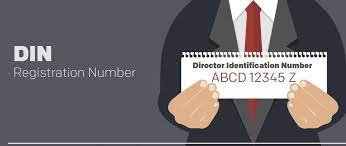
You only have until the end of this month to apply for your director identification number (DIN) if you have not done so. There are tough penalties for directors who do not obtain their DIN by the end of November 2022. Fines could be as much as $1.1 million for failure to have a DIN when required.

Guarantees and indemnities
A contracting party can seek to reduce its possible exposure for loss caused by breach of contract by requiring the other party or a third party to provide contractual promises in the form of guarantees or indemnities.
While they are common contractual clauses, particularly in commercial bargains, guarantees and indemnities are subject to special rules of interpretation and need to be drafted carefully.
Guarantees and indemnities can be used separately or together, and can also be used with other risk allocation clauses such as liquidated damages, exclusion, warranty and insurance clauses.
Warranties and indemnities
One of the principal ways in which a buyer will seek to protect itself in a transaction is by requiring the seller to provide warranties about the business in the business purchase agreement. If it later transpires that the warranty was inaccurate and this causes the buyer loss, the buyer may have remedies against the seller.
The buyer can also seek to include a requirement that the seller indemnify it against any losses the buyer sustains as a result of a breach by the seller of a warranty or other provision of the agreement.

Electronic Conveyancing in Queensland
eConveyancing is the use of a web-based platform to conduct property settlement transactions. The eConveyancing platform facilitates the preparation, execution and lodgment of land title documents electronically and allows financial settlements to occur digitally through the electronic transfer of funds. There are currently two approved Electronic Lodgement Network Operators (ELNOs) in the market: PEXA and Sympli.

SAFTs and digital token offerings
The idea for the SAFT is derived from the ‘Simple Agreement for Future Equity’, or SAFE. The SAFE has been widely used for financing purposes among early-stage companies, and acts as an investment instrument alternative to convertible debt. Although SAFE templates can differ, the overall goal was to create a set of basic funding terms startups and investors can adhere to while deferring decisions about valuation, liquidation preferences and participation rights until later-stage rounds of financing.

What in the world is Defi?
Decentralized finance or DeFi is a financial system that reimagines financial transactions by removing intermediaries and is based on blockchain technology, typically Ethereum. Various financial transactions are possible with DeFi's 'smart contracts' that execute financial transactions under certain conditions.

What is a DAO merger?
DAO, or decentralized autonomous organization, is a community-led entity with no central authority. It is entirely autonomous and transparent and follows smart contracts to lay the foundational rules, execute the agreed-upon community-led decisions, proposals, and votings.